The reader holds every file at once, proposes places, and decides none of them
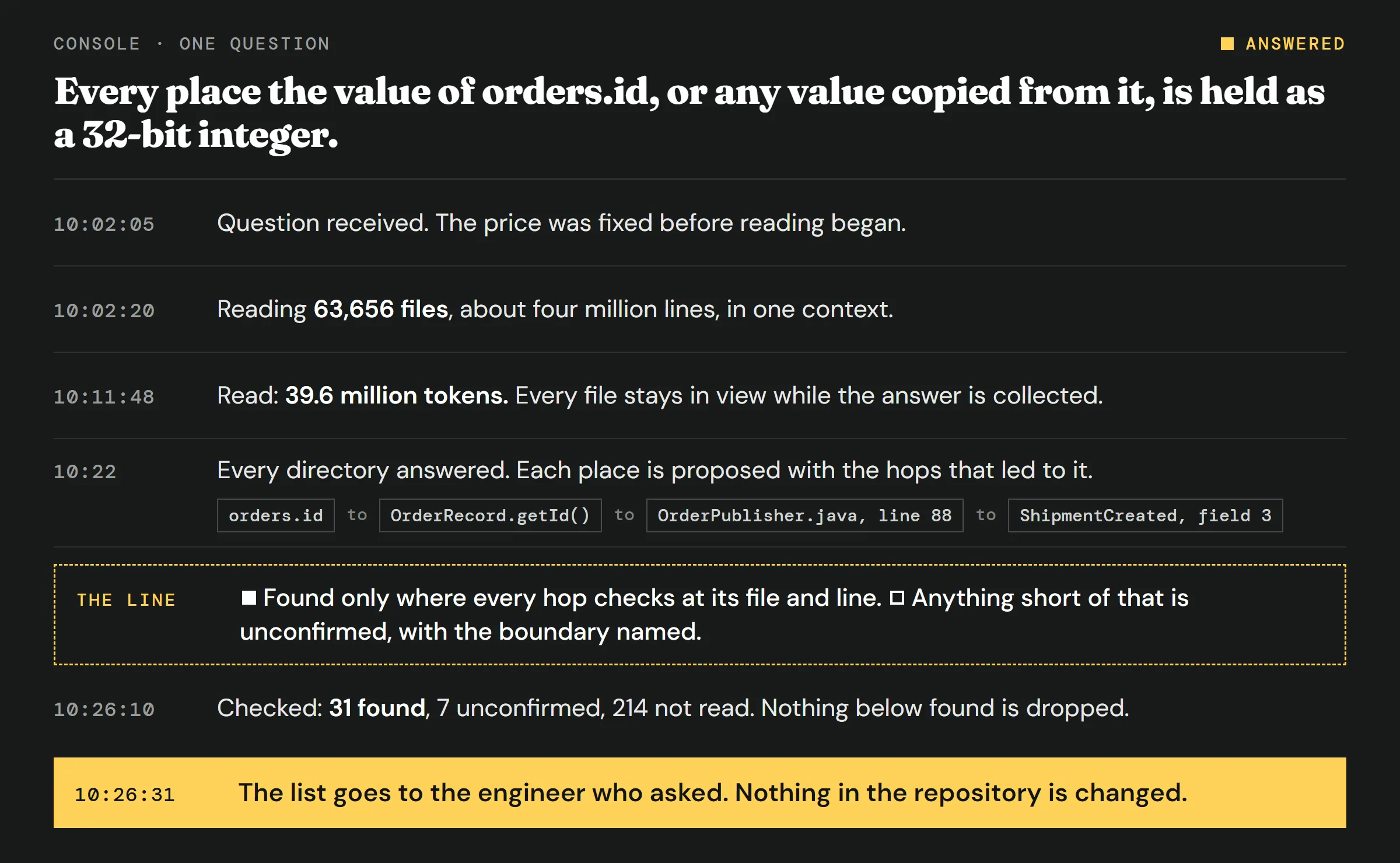
The console while one question is read. The reader is an open-weight code model we extended to 60 million tokens, on eight-GPU nodes we rent in Stockholm.
Read so far
files and lines, one context holding them all
Proposed
each place, with the hops that led to it
The checking line
found only where every hop checks
The last line
the engineer who asked decides; nothing is changed
It reads every file at once, by a rule you can check before paying
The quote lists every file set aside, with its reason, before any charge. The price of the rule: a hop inside a skipped file can only come back unconfirmed.
Services, schemas, migrations, pipelines, exports and tests go into one sequence, the question last. Trained on public repositories and a hand-checked question set, never your code.
Set aside by rule: binaries, data files over 1 MB, vendored directories over 5 MB, generated output, lockfiles and minified files.
Generated code is read at its source. The .proto and the OpenAPI spec go in; the classes built from them stay out.
It proposes a list grouped by the change each place needs, and never a patch
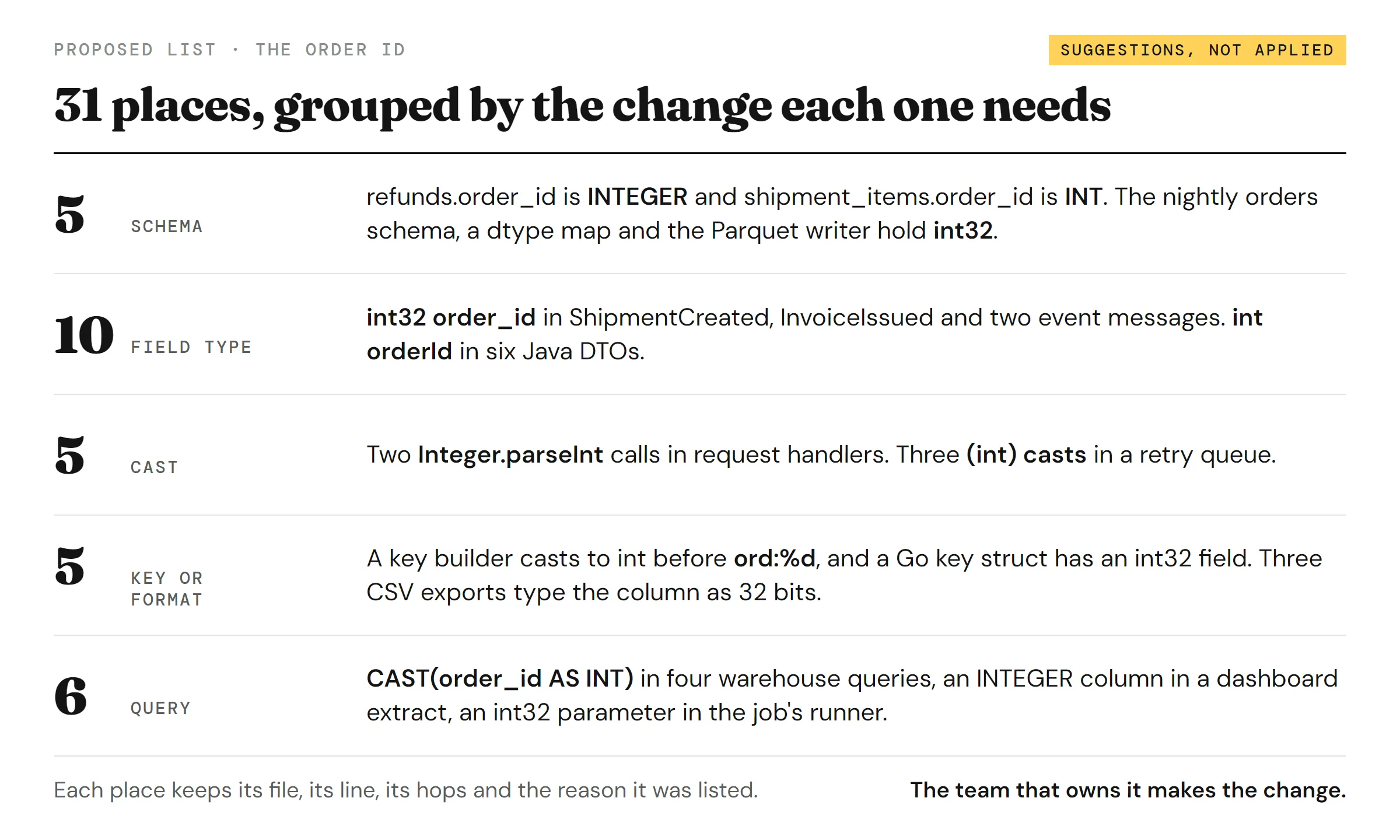
Schema, field type, cast, key or format, query, test code. Shown: the order-id list in those groups, and one proposal opened.
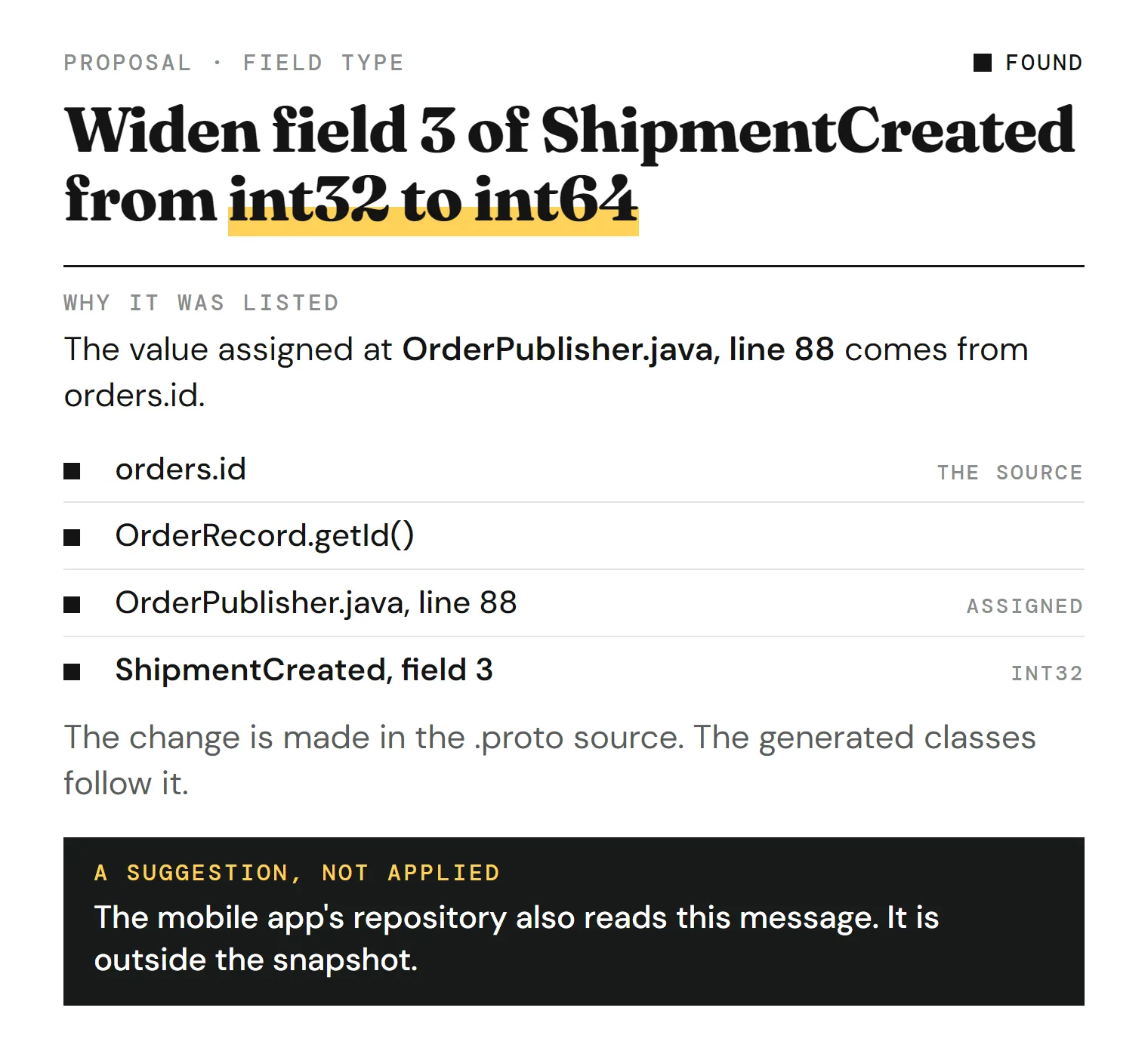
Field type
widen field 3 of ShipmentCreated from int32 to int64
Why listed
OrderPublisher.java line 88 assigns it from orders.id
Not applied
a suggestion; the mobile app's repository also reads it
Found means every hop was checked, and anything short of that is unconfirmed
No place carries a percentage. A cut-off on one would drop exactly the places nobody looked at.
Found
every hop cited at a line our parsers opened
Unconfirmed
stopped at another repository, a vendor or reflection, boundary named
Citation failed
also unconfirmed, with the failed hop named
Not read
set aside by rule, or unparseable
Ruled out
grep hits for its names, each with a reason
Dropped
nothing
Every change on the list is made by an engineer on the team that owns that place; the endpoint only answers.
It opens no pull request and widens no field. A team that wants the change made rather than listed wants a different product.